
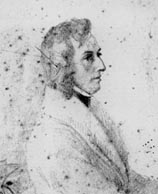
FREDERICK FRANCISZEK CHOPIN
22ndFebruary 1810 --- 17th October 1849
Last Updated on September 2026
By Steven Ritchie
And now for the Music

(4096)"Valse in A Minor, Opus.34, No.2". Sequenced by Steven Ritchie.
(4069)"Nocturnes Opus.9, No.2, Dedicated to Camille Pleyet". Sequenced by Steven Ritchie.
(3407)"Valse Opus.64, No.1". Sequenced by Steven Ritchie.
Thanks to Robert Finley for music below.
(4861)"Sonata in B minor, No.3, 3rd mov, Largo". Sequenced by Robert Finley. (4861)"Sonata in B minor, No.3, 4th mov, Presto". Sequenced by Robert Finley. NEW (5040)"Etude No.10 Opus.10". Sequenced by Aoy. Thanks to Sloweater for the music below.
(4523)"Etude in C, Opus.10, No.1". Sequenced by Sloweater. (4522)"Etude in A minor, Opus.10, No.2". Sequenced by Sloweater. (4521)"Etude in E, Opus.10, No.3". Sequenced by Sloweater. (4520)"Etude in C sharp minor, Opus.10, No.4". Sequenced by Sloweater. (4519)"Etude in E minor, Opus.10, No.6". Sequenced by Sloweater. (4518)"Etude in F, Opus.10, No.8". Sequenced by Sloweater. (4517)"Etude in F minor, Opus.10, No.9". Sequenced by Sloweater. (4516)"Etude in A Flat, Opus.10, No.10". Sequenced by Sloweater. (2411)"Etude Opus.10, No.5, Black keys". Sequenced by Heinz Kannengiesser. (397)"Etude No.7 in C Major Opus.10, No.7". Sequenced By Anousone Kitisa (201)"Etude Opus.10 No.11". Sequenced by Gabriele Giulimondi Thanks to K.Oguri for the music below.
(3412)"Piano Concerto No.1, Opus.11, Mov.1". Sequenced by K.Oguri. (3411)"Piano Concerto No.1, Opus.11, Mov.2". Sequenced by K.Oguri. (3410)"Piano Concerto No.1, Opus.11, Mov.3". Sequenced by K.Oguri. Real time Sequenced from Piano Competition 2011, below.
(4737)"Ballade in F Major, Opus.23, No.1". Real time sequenced by Annie Zhou. (836)"Ballade in F Major, Opus.23, No.2,(Info by Ben Dotte)". Sequencer unknown. (4072)"Etude Opus.25, No.1". Sequencer Unknown. (4071)"Etude Opus.25, No.2". Sequencer Unknown. (4070)"Etude Opus.25, No.3". Sequencer Unknown. Real time Sequenced from Piano Competition 2006 to 2011, below.
(4736)"Etude Opus.25, No.8". Real time sequenced by Gregory De Turck. (4735)"Etude Opus.25, No.10". Real time sequenced by Korchinskaya Kogan. NEW (4968)"Etude in A Minor, Opus.25, No.11". Real time sequenced by SuYeon Kim. NEW (4967)"Etude in C Minor, Opus.25, No.12". Real time sequenced by Kimberly Hou. (4074)"Etude Opus.28, No.1". Sequencer Unknown. (4073)"Etude Opus.28, No.2". Sequencer Unknown. (4871)"Etude Opus.28, No.3". Sequencer Unknown. (4870)"Etude Opus.28, No.4". Sequencer Unknown. (4869)"Etude Opus.28, No.5". Sequencer Unknown. (4868)"Etude Opus.28, No.6". Sequencer Unknown. (4867)"Etude Opus.28, No.7". Sequencer Unknown. (4868)"Etude Opus.28, No.8". Sequencer Unknown. Thanks to Heinz Kannengiesser for the music below. Email (mail@heinz-kannengiesser.de)
(2412)"Prelude Opus.28, No.15, Raindrop". Sequenced by Heinz Kannengiesser. Thanks to Burkhard Osteneck for the music below. Email (b.osteneck@t-online.de)
(2542)"Prelude opus.28, No.16 in B flat minor". Sequenced by Burkhard Osteneck. (400)"Scherzo No.2, Opus.31". Sequenced by Ron Lubetsky Thanks to Malcolm Dale for the music below.
(3409)"Sonata No. 1 in C Minor Opus.4". Sequenced by Malcolm Dale. (3408)"Sonata No.2 in B Flat minor, Opus.35". Sequenced by Malcolm Dale. Thanks to Victor Waldo for music below. Email (vicwal@mmind.net)
(817)"Revolutionary". Sequenced in real time by Victor Waldo. (680)"Polonaise Opus.40, No.1 Military" Sequenced in real time by Victor Waldo. Thanks to Jae-Hyuck Cho for Sequenced in real time below.
(3630)"Fantasy in F Minor, Opus 49". Sequenced in real time by Jae-Hyuck Cho. Thanks to Robert Finley for music below.
(518)"Opus.53, Polonaise in A flat, Heroic". Sequenced by Robert Finley. (399)"Nocturne No.15 in F Minor Opus.55 No.1". Sequenced by Robert Finley. (396)"Nocturne No.1, Opus.62" Sequenced by Robert Finley. (24)"Winter wind etude". Sequenced by Robert Finley. (68)"Sonata in B minor, No.3, 1st Mov, Allegro". Sequenced by Robert Finley. (398)"Sonata in B minor, No.3, 2nd Mov, Scherzo". Sequemced by Robert Finley. Thanks to B.S. Lengton for the music below. Email (mb.lengton.athelas@12move.nl)
(2622)"Variations sur un air national allemand, in E major". Sequenced by B.S. Lengton. Thanks to Simon for the music below. Email (dbscoolboy@sinaman.com
(2175)"Polish Songs for Solo Voice and Piano accomplements No.1". Sequenced by Simon Mokkie. (2176)"Polish Songs for Solo Voice and Piano accomplements No.2". Sequenced by Simon Mokkie. (2177)"Polish Songs for Solo Voice and Piano accomplements No.3". Sequenced by Simon Mokkie. (2178)"Polish Songs for Solo Voice and Piano accomplements No.4". Sequenced by Simon Mokkie. (2179)"Polish Songs for Solo Voice and Piano accomplements No.5". Sequenced by Simon Mokkie. (2180)"Polish Songs for Solo Voice and Piano accomplements No.6". Sequenced by Simon Mokkie. (2181)"Polish Songs for Solo Voice and Piano accomplements No.7". Sequenced by Simon Mokkie. (2182)"Polish Songs for Solo Voice and Piano accomplements No.8". Sequenced by Simon Mokkie. (2183)"Polish Songs for Solo Voice and Piano accomplements No.9". Sequenced by Simon Mokkie. (2184)"Polish Songs for Solo Voice and Piano accomplements No.10". Sequenced by Simon Mokkie. (2185)"Polish Songs for Solo Voice and Piano accomplements No.11". Sequenced by Simon Mokkie. (2186)"Polish Songs for Solo Voice and Piano accomplements No.12". Sequenced by Simon Mokkie. (2187)"Polish Songs for Solo Voice and Piano accomplements No.13". Sequenced by Simon Mokkie. (2188)"Polish Songs for Solo Voice and Piano accomplements No.14". Sequenced by Simon Mokkie. (2189)"Polish Songs for Solo Voice and Piano accomplements No.15". Sequenced by Simon Mokkie. (2190)"Polish Songs for Solo Voice and Piano accomplements No.16". Sequenced by Simon Mokkie. (2191)"Polish Songs for Solo Voice and Piano accomplements No.17". Sequenced by Simon Mokkie. (2192)"Polish Songs for Solo Voice and Piano accomplements No.18". Sequenced by Simon Mokkie. (2175)"Polish Songs for Solo Voice and Piano accomplements No.19". Sequenced by Simon Mokkie. (207)"Etude No.2 in A Minor". Sequenced by Anousone Kitisa (200)"Imprompt Fantastique,(Info by Louis-David Perron)". Sequencer unknown (56)"Finale to B Minor Paino Sonata". Sequencer unknown (96)"Barcarolle in F sharp Major,(Info by Ed)". Sequencer unknown (265)"Ecossaise No.2 in G,(Info by Gary K Allen)". Sequencer unknown
If you done any Classical pieces of say for example, Delius, mozart, and so on etc,
please email them to the classical music site with details to
"classical (@) ntlworld.com" written this way to stop spammers
just remove spaces and brackets for email address, thank you.
Visitors to this page --
Back to Classical Midi Main Menu click "HERE"
